Industries today are going through the era of speed along with flexibility and efficiency are no longer optional they are essential. The outdated infrastructure, which is expensive and difficult to upgrade and adapt to the need for real-time analytics and distributed operations. ScalerPi presents a fresh view through a combination of edge computing and practical engineering to create solutions that truly scale.
The Raspberry Pi is at the heart of this revolution, allowing companies to reconsider their methods of designing and managing systems. Businesses can now utilize portable, light devices to replace bulky centrally-located hardware. This strategy not only lowers time to respond, but also allows teams to respond instantly to any changes in conditions.
Data-driven Action at the Edge
The real advantage of edge computing lies in the capability to perform data processing locally. In a lot of industrial settings waiting for cloud-based systems to respond isn’t feasible. ScalerPi provides infrastructure that is completely independent, yet can be integrated with other systems, if required.
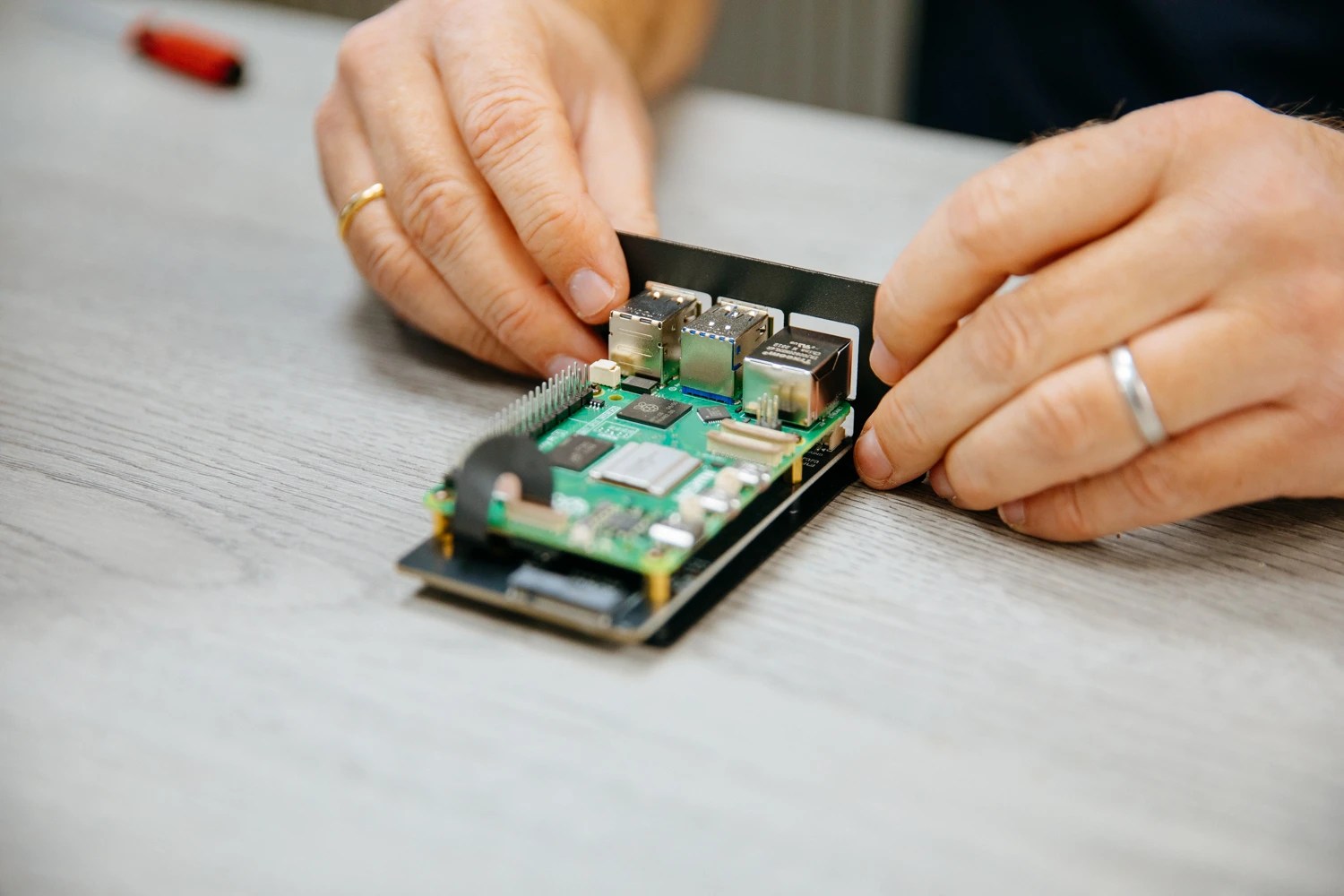
A key component of this setup is the industrial Raspberry Pi IoT gateway, which functions as the central connecting point between devices and applications. It facilitates seamless communication between sensors, software and machine platforms. It’s possible for you to monitor the activities in real-time. It is possible to identify issues early and ensure consistency across different locations.
For industries like logistics and environmental monitoring, this capability can be transformative. This capability allows systems to continue working even in remote areas or those with poor connectivity, so that data and operations can be accessible.
Compact Power for Demanding Environments
One of the biggest issues in industrial computing is to balance performance with practicality. While large servers provide a lot of power, they’re often expensive, use a lot of energy, and are limited ability to change. ScalerPi is able to overcome this by using industrial Raspberry Pi servers that deliver reliable computing in a compact form, with a low energy consumption.
These servers are great for locations with little space and power. If they are installed in a factory or a retail outlet or a remote monitor station, they deliver consistent performance without the need for complex infrastructure. Modularity enables businesses to expand their systems slowly, depending on actual requirements.
Taking this a step further, the compact industrial Raspberry Pi compute module server offers even greater versatility. These servers, built for extreme conditions, combine robustness and high-end processing capabilities. These servers are perfect for applications that require to be running continuously, such as smart city systems and industrial automation configurations.
Flexibility Through Containerized Deployment
Containerization is an essential element of modern infrastructure. ScalerPi incorporates industrial Raspberry pi docker environments for flexibility and efficiency in managing applications. Docker allows businesses to deploy, scale, and update applications without interrupting their ongoing operations.
This approach simplifies the development process and assures that the application is consistent across deployments. The applications can be tested in a single environment and easily transferred to another environment, decreasing the risk of mistakes and increasing overall reliability. This kind of control can be extremely beneficial for companies that have multiple sites.
Containerization can help in the development of new ideas. Teams can try out and test new capabilities without having to alter existing systems.
Practical Solutions across multiple sectors
The strength of ScalerPi lies in its capacity to be able to adapt to different industries. Industrial automation using Raspberry Pi helps to reduce downtime, boost efficiency and enable predictive maintenance in manufacturing. The machines can exchange and transmit data to create a connected and intelligent work environment.
In agriculture, edge technology help farmers adopt more efficient farming practices. Sensors monitor the health of crops as well as soil condition. They also monitor the weather patterns.
Retail and hospitality sectors are able to benefit from information about customer behavior in real-time. Businesses can improve the customer experience through optimizing their business processes. This is a case of digital signage and queue management. Edge infrastructure is employed in public sector projects, such as smart cities to monitor environmental conditions and asset management.
Bridge Hardware and Cloud Confidently
What distinguishes ScalerPi is its ability to bridge the gap between physical devices and cloud-based systems. It creates a single platform by combining hardware expertise and the latest cloud technology.
The result is that businesses can expand without increasing complexity. The infrastructure can be managed, cost-effective, and secure whether you start with a tiny installation, or grow to thousands of devices. The transparent pricing system and modular designs aid in the process. Organizations can focus on innovation and not operating issues.
Industrial Technology: A Future-Ready Approach
As industries continue to evolve as they do, the demand for an adaptable and efficient infrastructures will increase. ScalerPi provides a solution that meets these demands by merging the power of edge computing with the versatility of Raspberry Pi technology.
Each piece of equipment, including industrial Raspberry Pi Servers, advanced IoT gateways and containerized software is built to be scalable and functional. The system is built to not only meet the needs of today, but also make sure that businesses are prepared for the future.